

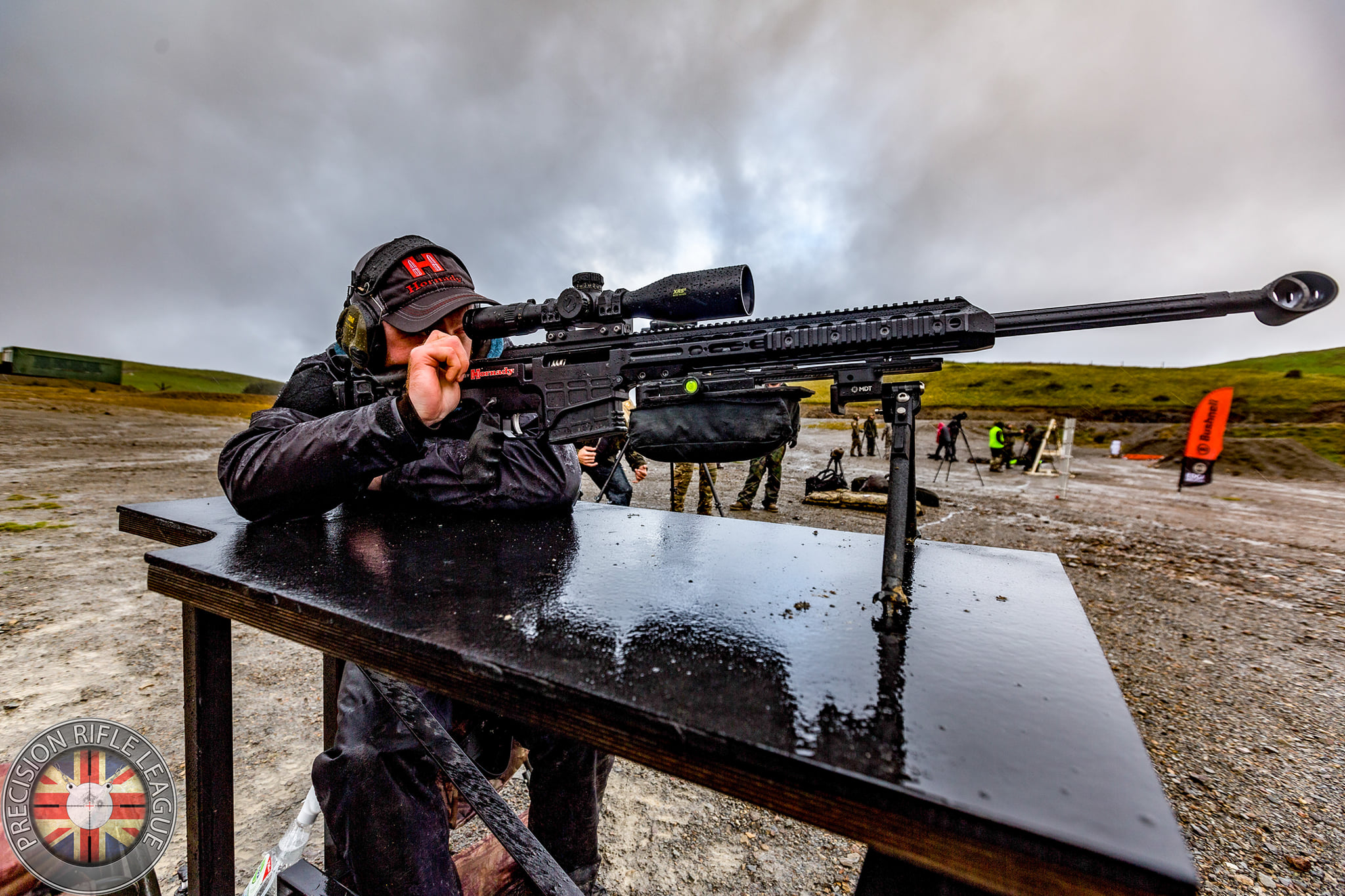
A premium rifle system is only as accurate as the shooter pulling the trigger. To shoot precisely and consistently; whether you are printing tiny groups on a National Rifle Association (NRA) target range at Bisley or taking a highly calculated shot on a winter deer stalk, your rifle must fit you flawlessly.
Having a rifle that is not optimally set up for your body mechanics can spoil the shooting experience, induce muscle fatigue, and completely ruin your results on target. Fortunately, modern rifle chassis and aftermarket stocks are highly adjustable, allowing you to tailor the ergonomics of your firearm to your specific physical stature, clothing layers, and shooting discipline.
Here, we will explore the critical elements of rifle ergonomics, explain the biomechanics of trigger reach, detail how to measure your Length of Pull, and highlight superlative aftermarket upgrades from Magpul, available through Edgar Brothers.
Why Ergonomics Matter: The Science of the "Cheek Weld"
The ergonomics of your rifle will fundamentally dictate how effortlessly you can adopt a consistent shooting position. Borrowing a concept from elite sports, the "Feel vs. Real", a perfectly set up rifle should simply feel like an extension of your body.
You should not have to consciously think about how you address the rifle. When you drop behind your telescopic sight, your eye should instantly align with the crosshairs perfectly on axis. If you have to strain your neck, shift your shoulders, or constantly adjust your cheek weld (how your face rests on the stock), your concentration is being stolen away from reading the wind and executing a perfect trigger press.
A consistent, repeatable cheek weld ensures that your eye looks through the exact optical centre of the scope every single time, eliminating parallax error and "scope shadow" (the black crescent that appears when your eye is off-centre).
Core Adjustments: Length of Pull and Comb Height
The two most critical, and most immediately adjustable, aspects of a firearm’s stock are the Length of Pull (LOP) and the Comb Height.
Understanding Length of Pull (LOP)
The Length of Pull is the physical distance between the face of the trigger blade and the rear centre of the buttstock (recoil pad).
- The Perfect Fit: An ideal LOP allows your shoulder to sit squarely behind the rifle to absorb recoil directly backward, while your trigger finger falls naturally onto the trigger at a perfect 90-degree angle.
- The Consequences of Poor LOP: If the stock is too short, you will feel cramped, your thumb may impact your nose under heavy recoil, and the rifle will feel jumpy. If it is too long, you will strain your shoulder and neck, making it incredibly difficult to properly "load" your bipod for rapid follow-up shots.
How to Measure Your Perfect Length of Pull
1.Check Clear:
Ensure your firearm is completely unloaded and safe before taking any measurements.
2.The Crook of the Arm Test:
Bend your firing arm at a 90-degree angle, keeping your elbow tucked comfortably against your side.
3.Place the Rifle:
Place the buttpad of the unloaded rifle directly into the crook (inside bend) of your elbow, keeping the barrel pointed straight up.
4.Assess Trigger Reach:
Reach your hand forward to grasp the pistol grip. The pad of your index finger should rest perfectly on the trigger blade without you having to stretch your hand or excessively bend your wrist. If your finger cannot reach, the LOP is too long. If your finger wraps entirely around the trigger to the second knuckle, the LOP is too short.
Comb Height & Scope Rings
The comb is the top section of the buttstock where your cheek rests. Comb height is the vertical distance between this resting point and the centre of your optic.
If your comb is too low (common when mounting large objective 56mm scopes on traditional hunting rifles), you will have to lift your head off the stock to see through the scope, resulting in a "chin weld." This introduces massive instability. You can fix this by adding a cheek riser to your stock or upgrading to an adjustable chassis.
The Biomechanics of Trigger Reach & Pistol Grips
The pistol grip is the primary interface between your hand and the rifle's fire control group. Having the right grip angle and thickness is essential to factor out inaccuracies caused by improper trigger manipulation (such as "pulling" or "pushing" the shot).
|
Grip Style |
Ergonomic Benefit |
Ideal Shooting Application |
|
Vertical Grip |
Pulls the rifle straight back; aligns the trigger finger perfectly 90-degrees to the bore. |
Prone, benchrest, F-Class, and Precision Rifle Series (PRS). |
|
Swept-Back (Angled) |
Feels nimble; mirrors the pointing dynamics of a shotgun. |
Standing, kneeling, and active deer stalking. |
|
Rubber/Textured |
Enhances tactile friction in wet conditions or when wearing gloves. |
Winter hunting, tactical applications, Civilian Service Rifle (CSR). |
Weight Distribution and Rifle Balance
Ergonomics are not just about dimensions; they are also about the physical balance point (centre of gravity) of your rifle system.
A rifle that is overly front-heavy will fatigue your support arm quickly when shooting off-hand, making your crosshairs figure-eight wildly. Conversely, a rifle that is too rear-heavy will pivot aggressively upwards during recoil, generating massive muzzle flip. Modern aftermarket stocks often feature internal compartments (or M-LOK slots) where you can add or subtract steel and lead weights to perfectly balance the rifle just forward of the magazine well.
Upgrading Your Setup: Top Magpul Aftermarket Stocks
Renowned for their rugged reliability and immense modularity, Magpul offers a phenomenal range of aftermarket stocks for modern sporting rifles (like AR-15s) and classic bolt actions (like the Remington 700).
AR-15 / Modern Sporting Rifle Stocks
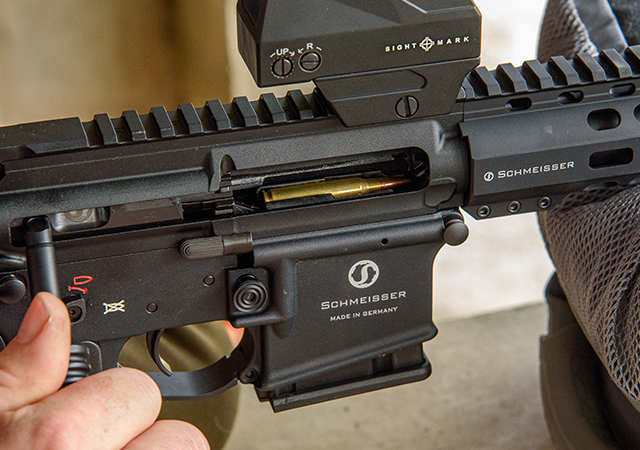
For shooters running straight-pull AR platforms (such as the Schmeisser range), upgrading the factory stock is the easiest way to enhance ergonomics.
- Magpul CTR® (Compact/Type Restricted): A streamlined, Mil-Spec adjustable stock featuring a supplemental friction lock system that entirely eliminates stock wobble.
- Magpul MOE® (Magpul Original Equipment): The industry standard for a lightweight, highly functional, and budget-friendly adjustable carbine stock.
- Magpul PRS® GEN3: The ultimate precision upgrade. This stock transforms an AR-15 into a true Designated Marksman Rifle (DMR). It features tool-less, micro-adjustable aluminium dials for both LOP and comb height, plus M-LOK slots on the bottom for mounting a rear monopod.
Bolt-Action Chassis Upgrades (Remington 700 Pattern)
- Magpul Hunter 700 Stock: A brilliant "drop-in" replacement that requires zero gunsmithing. It features an internal cast aluminium bedding block that guarantees a fully free-floated barrel, instantly improving the rifle's inherent accuracy. By adding modular spacer kits, you can perfectly dial in your LOP and comb height. Crucially, the polymer construction is 100% waterproof and impervious to the swelling that plagues traditional wooden stocks in the damp UK weather.
- Magpul Pro 700 Chassis: Magpul’s all-singing, all-dancing precision rifle chassis. Available in fixed or folding variants, it offers a full gamut of ambidextrous adjustments (grip angle, trigger reach, LOP, comb height, and butt pad cant). With a fully enclosed M-LOK forend for mounting heavy steel weights and bipods, it is an absolute powerhouse for budding PRS competitors and Extreme Long Range (ELR) shooters.
Conclusion
The ergonomics of your rifle system are a mission-critical element that directly impacts your accuracy, comfort, and overall enjoyment of the sport. As with selecting premium optics or bipods, you must carefully consider your specific physical requirements and your chosen shooting discipline.
Do not settle for a rifle that forces you to adapt your body to its shape. By investing in highly adjustable, premium aftermarket components from brands like Magpul, you can transform an off-the-shelf firearm into a perfectly tailored precision instrument.

FAQs
Yes. If your rifle fits you perfectly in a t-shirt during summer, it will likely feel too long when you are wearing a thick, insulated winter stalking jacket. Adjustable stocks (or removable spacer systems) allow you to shorten the LOP by half an inch in winter to maintain proper trigger reach.
A modern chassis system (like the Magpul Pro 700) typically utilises a rigid V-block aluminium bedding system that eliminates the need for messy glass or epoxy bedding. They also allow for the use of detachable AICS (Accuracy International Chassis System) box magazines and offer vastly superior adjustability compared to traditional wood or fibreglass stocks.
Magpul manufactures the Hunter series for several specific actions, most notably the Remington 700 (Short and Long Action), Ruger American, and Ruger 10/22. You must ensure you purchase the specific model designed for your rifle's unique action footprint.