

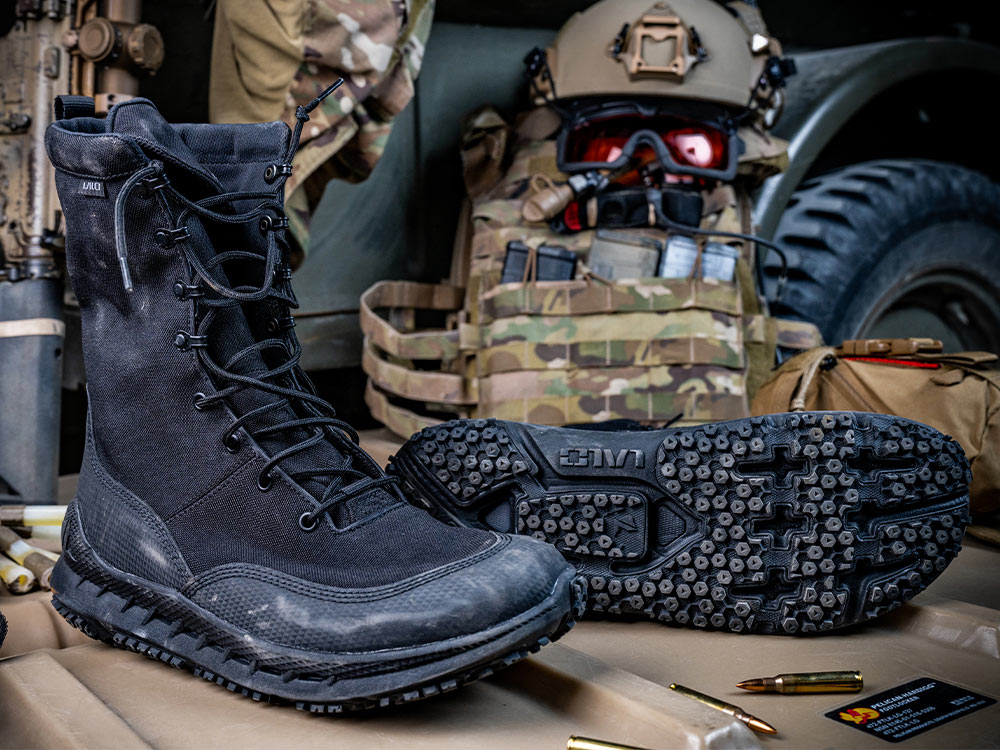
The physical demands placed on modern military personnel, law enforcement officers, and dedicated outdoor professionals are immense. Whether you are navigating unpredictable urban environments on a prolonged patrol or traversing rugged, undulating backcountry with heavy loads, your choice of footwear directly dictates your operational effectiveness. Gone are the days when heavy, unyielding leather boots were the only acceptable option. Today, the tactical landscape demands a hybrid approach: footwear that offers the uncompromising durability of traditional combat boots, seamlessly combined with the lightweight agility of modern trail-running shoes.
In this comprehensive guide, we delve into the anatomy of high-performance footwear, helping you select the perfect boots to withstand the rigorous demands of your specific operational environment.
What are the Best Tactical Boots for Tabbing and Ruck Marching?
"Tabbing" (Tactical Advance to Battle) and ruck marching involve covering long distances over varied, often punishing terrain whilst carrying a heavily weighted Bergen or rucksack. This immense downward pressure places extreme stress on the feet, ankles, and knees. Standard issue boots often fall short in these scenarios, leading to debilitating friction blisters, plantar fasciitis, and stress fractures.
Finding the best tactical boots UK operators recommend relies on selecting footwear explicitly engineered for load-bearing endurance. Tabbing boots for army personnel require a slightly wider toe box to accommodate natural foot swelling over long distances. Furthermore, they need a robust internal shank embedded within the midsole to prevent foot fatigue by stopping the boot from flexing too much over uneven rocks and roots.
For heavy-duty load carriage, the Salomon Forces Quest 4D Forces 2 is widely regarded as the pinnacle of Ruck Marching footwear. This boot incorporates Salomon’s proprietary 4D Advanced Chassis™, which guides the foot on even the roughest terrain, reducing fatigue, controlling flex, and providing exceptional orthopaedic stability for all-day treks under heavy loads.
Key Features of Professional Lightweight Combat Boots
When speed, agility, and stealth are your primary objectives, heavy ruck boots become a severe hindrance. Modern close-quarters combat (CQC), rapid response units, and urban police operations require footwear that allows for explosive, multi-directional movement without sacrificing essential protection.
Professional patrol boots are currently trending towards a highly athletic, low-profile design. When assessing lightweight combat boots, you should look for the following defining technical characteristics:
- Synthetic/Leather Hybrid Uppers: A blend of full-grain or nubuck leather for structural durability, paired with ripstop nylon or Kevlar-infused mesh for breathability and significant weight reduction.
- Minimalist Heel-to-Toe Drop: A lower drop (the height difference between the heel and the forefoot) promotes a more natural foot strike, increases proprioception (ground feel), and drastically improves agility.
- Rapid Drainage & Drying: For amphibious operations or consistently wet environments, non-waterproof models equipped with drainage ports are often preferred over Gore-Tex (GTX), as they expel water instantly and dry significantly faster whilst on the move.
Brands such as LALO Tactical were explicitly founded to serve the exacting needs of Special Operations Forces, bridging the gap between athletic trainers and robust combat wear. The LALO Shadow Amphibian, for example, features a composite forefoot plate and a unique two-way drainage system, making it one of the lightest, most capable maritime boots on the market. Alternatively, the Salomon XA Forces Mid offers a perfect middle-ground, acting as a highly durable tactical trainer that excels in fast-paced, high-intensity environments.
Tactical Footwear Comparison Matrix
|
Boot Category |
Best Suited For |
Key Biomechanical Features |
Top Recommendations |
|
Heavy Load / Tabbing |
Ruck marching, mountainous terrain, sustained patrols with heavy Bergens. |
Stiff midsole shank, high torsional rigidity, robust toe bumper, deep aggressive lugs. |
Salomon Quest 4D Forces 2 |
|
Lightweight / Assault |
Urban operations, CQC, rapid response, fast-packing, vehicle work. |
High flexibility, athletic outsole, breathable uppers, zero-to-low drop. |
LALO Shadow, Salomon Speed Assault 2 |
|
Mid-Weight Patrol |
Daily policing, multi-role military use, general outdoor and range use. |
Balanced shock absorption (EVA), medium ankle support, Gore-Tex weather resistance. |
Salomon XA Forces 8 Gore-Tex EN |
Improving Comfort: Shock Absorption and Ankle Support
When carrying an additional 40 to 60 lbs of gear, the impact forces travelling up your legs with each step are highly destructive to your joints. Effective shock absorption is therefore not a luxury; it is a critical operational necessity.
Modern tactical footwear utilises dual-density EVA (Ethylene-Vinyl Acetate) or PU (Polyurethane) foam in the midsoles. This material compresses to absorb the initial kinetic strike, then rebounds to provide energy return for the next step. However, excessive, pillowy cushioning can create dangerous instability on uneven ground. To combat this, advanced boots integrate rigid chassis systems that cup the heel, providing vital lateral stability.
Ankle support is equally critical, but it is often misunderstood. Support does not solely come from how high the leather is cut; it relies heavily on how well the heel is locked into the back of the boot. Professional patrol boots feature advanced lacing systems, such as locking eyelets and lace pockets, that allow you to securely anchor your heel. This prevents the internal friction that causes blisters, whilst still allowing enough mechanical flex in the calf for ascending steep gradients.
How to Maintain Your Tactical Footwear for Maximum Durability
Even the most expensive, highly engineered boots will fail prematurely if neglected. The UK’s muddy, boggy, and highly abrasive environments can rapidly degrade leather, dry out synthetic materials, and block breathable membranes. Proper maintenance ensures your boots remain reliable deployment after deployment.
- Clean Immediately: After an operation or hike, remove mud and abrasive grit using a soft brush and lukewarm water. Dried mud draws essential oils and moisture out of leather, causing it to crack and split over time.
- Dry Naturally: Never force-dry your boots on a radiator, near an open fire, or in a drying room that is too hot. Extreme heat melts the adhesives holding the sole to the upper and rapidly shrinks leather. Remove the insoles and let them dry naturally in a well-ventilated room. Stuffing them with newspaper can help draw out internal moisture safely.
- Condition the Leather & Re-Proof: Treat full-grain leather with a specialised wax or conditioner to keep it supple and restore its natural water repellency. For synthetic sections, reapply a DWR (Durable Water Repellent) spray to ensure water continues to bead off the surface rather than soaking in.
- Care for the Membrane: If your boots feature a Gore-Tex (GTX) liner, dirt and sweat can block the microscopic pores, completely halting breathability. Occasionally flushing the inside of the boot with clean water helps clear out salt crystals from dried sweat, restoring the membrane's functionality.
FAQs
Modern tactical boots require far less break-in time than traditional full-leather combat boots. To break them in safely, wear them around the house or on short 1-2 mile walks with the exact high-quality Merino wool socks you plan to deploy in. Gradually increase the distance and the weight in your rucksack over a two-week period to allow the footbed to mould to your specific foot shape.
This depends on your environment. In the consistently wet and boggy UK Highlands, a Gore-Tex (GTX) boot is highly recommended to prevent trench foot. However, if you are tabbing in hot, arid environments or undertaking river crossings, a non-waterproof boot with drainage ports is superior, as it will dry out much faster once submerged.
Police and private security professionals spend long hours standing or walking on unforgiving concrete and tarmac. The best professional patrol boots prioritise high-rebound cushioning for joint health, slip-resistant outsoles certified for oil and wet surfaces, and a polished, uniform-compliant appearance without sacrificing athletic mobility.