

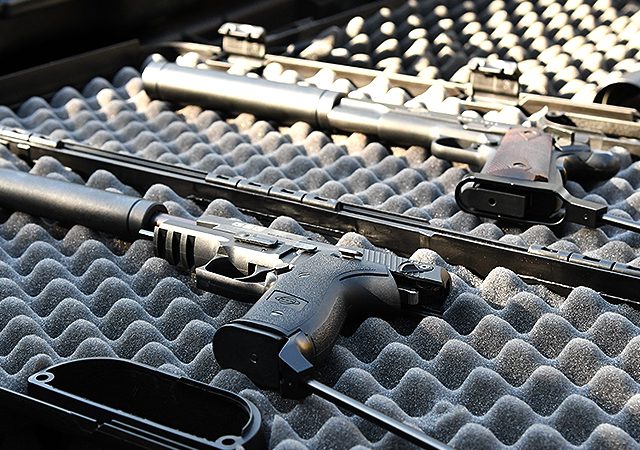
Protecting your firearm from the rough and tumble of travel is paramount. A high-quality case not only physically shields your investment from impact damage and the unpredictable British weather, but it also allows for convenient transport, organises your accessories, and mitigates the risk of theft by hiding your rifle from prying eyes.
When browsing for rifle protection, the primary choice comes down to two distinct categories: the soft case (or gun slip) and the hard case. Soft cases typically offer greater mobility, lightweight materials, and ergonomic comfort, while the hard case sits at the absolute opposite end of the spectrum, providing crush-proof, waterproof security.
Here, we will explore the deep nuances of both systems, explain the strict UK legal requirements for transporting firearms by road and air, and highlight superlative protective equipment from leading brands like Bergara and Magpul, available through Edgar Brothers.
The True Cost of Poor Firearm Transport
Firearms and premium optics are significant financial investments. While a modern rifle action is inherently robust, the delicate internal erector mechanisms of your telescopic sight and the precise torque settings of your scope rings are not immune to heavy, repetitive impacts.
If you throw an unprotected rifle into the boot of your vehicle alongside heavy ammunition boxes and range bags, you are inviting disaster. Even if the rifle is not visibly scratched or damaged, a sudden shock during transit can loosen action screws, induce parallax error, or subtly shift your turrets. This "invisible" damage will corrupt your zero, turning a highly precise rifle into an inconsistent frustration on the firing point. The long and short of it is simple: you must protect your firearm during transport to maintain absolute accuracy.
Soft Rifle Cases: Pros, Cons, and Best Uses
For the vast majority of everyday trips to the local range, club, or woodland permission, the soft rifle case is the ubiquitous choice for UK shooters.
|
Feature |
The Soft Case Advantage |
The Soft Case Disadvantage |
|
Protection |
Adequate for everyday bumps, scratches, and light rain. |
Cannot withstand crushing weight, heavy impacts, or extreme drops. |
|
Ergonomics |
Lightweight, often featuring backpack straps for hands-free carry. |
Can become unbalanced and sag if overloaded with heavy accessories. |
|
Storage & Storage |
Highly versatile. Easy to fold or compress to save space when empty. |
Less rigid internal organisation; items can shift during transit. |
|
Versatility |
Many tactical models unzip to double as a padded shooting mat. |
Zips, stitching, and fabric can eventually wear out under extreme field use. |
Top Soft Case Recommendations: Bergara
Well-respected as a superlative barrel and rifle manufacturer, Bergara also produces a phenomenal range of tactical and hunting soft cases designed for the active, mobile shooter.
- The Bergara Soft Gun Case (Large): A heavily padded, rugged slip that accommodates scoped rifles with ease, featuring dedicated external pockets for your bolt, ammunition, and cleaning kit.
- The Bergara Double Gun Case: Ideal for competitive shooters or stalkers bringing a backup rifle, allowing two scoped firearms to be transported safely without their optics clashing.
- The Bergara Folding Shooting Mat Case: The ultimate multi-purpose tool. This soft case unzips completely to lie flat, instantly transforming into an insulated, waterproof shooting mat for prone engagements on wet ground.
When Do You Absolutely Need a Hard Case?
While soft cases excel in daily convenience, there are scenarios where a hard case is absolutely non-negotiable. You need a hard case when there is a significant risk of your equipment being crushed, dropped, or subjected to extreme environmental abuse.
If you are packing your rifle into a 4x4 packed tightly with heavy steel targets, stacking cases in the back of a quad bike, or handing your firearm over to an airline baggage handler, a hard case is mandatory.
Internal Layouts: Pluck Foam vs. The Magpul DAKA® GRID System
Historically, hard cases relied on "pluck foam" (open-cell polyurethane). While cheap, pluck foam degrades over time, absorbs moisture (which causes rust), and cannot be easily reconfigured if you change your rifle setup.
Enter the Magpul DAKA® hard case series. Representing the pinnacle of modern firearm storage, these stout, sturdy, and ergonomic cases use the revolutionary DAKA Grid system. This utilises High-Density Expanded Polypropylene (EPP) blocks that peg into a grid base. It absorbs zero moisture, offers immense drop protection, and can be infinitely reconfigured in seconds without cutting a single piece of foam.
- Magpul DAKA® C35: A compact hard case perfect for carbines, short-barrelled straight-pulls, or broken-down shotguns.
- Magpul DAKA® R44: The mid-sized workhorse, ideal for standard-length hunting rifles and sporting AR-15 platforms.
- Magpul DAKA® LR53: The ultimate long-range storage solution. Capable of housing Extreme Long Range (ELR) rifles with massive optics and heavy barrels, ensuring zero shift is practically impossible.
How to Measure Your Rifle for the Perfect Case Fit
Before purchasing any case, you must accurately measure your rifle system to ensure a snug fit.
- Measure Overall Length (OAL): Measure from the tip of the muzzle to the extreme rear of the buttstock. Crucial: If you travel with your sound moderator attached, measure the rifle with it fitted. Add at least two to three inches of clearance to this measurement.
- Measure Height: Measure from the bottom of the pistol grip or magazine well to the highest point of your scope's elevation turret.
- Account for Accessories: If you use a rigid hard case, consider the footprint of your bipod, spare magazines, and bolt. With systems like the Magpul DAKA, you can map out dedicated blocks for your accessories, ensuring nothing touches the rifle during transit.
UK Legal Requirements for Gun Transport: Road & Air
Whether you are driving to Bisley or flying to a driven boar hunt in Europe, you must strictly adhere to UK firearm transport legislation and Home Office guidance.
Travelling by Road in the UK
When driving from your home to the range or permission, it is best practice to drive directly to your destination to avoid leaving your firearm unattended. However, on long journeys, pit stops are inevitable.
- Vehicle Security: Your firearm must be stored securely out of sight (e.g., locked in the boot). Ensure the vehicle is locked, alarmed, and parked in a highly visible area, ideally under CCTV. If possible, reverse your vehicle against a wall so the boot cannot be opened.
- Disassembly: Make unauthorised use of the firearm as difficult as reasonably practicable. Remove the bolt and store it securely on your person or in a separate locked compartment.
- Ammunition: Ammunition must be stored separately from the firearm in a locked container. The firearm must never be loaded during transit.
- Always carry your valid Firearms Certificate (FAC) with you when transporting your rifles.
Travelling Abroad by Air (Airline Approved Transport)
Taking your rifle overseas for a hunting trip or international competition requires meticulous planning.
- Flight Regulations: Firearms cannot be taken as hand luggage. They must be declared in advance to the airline, checked into the hold, and securely locked inside a rugged, airline-approved hard case.
- TSA Locks: If travelling internationally (especially via the US), ensure your hard case is secured with padlocks. (Check specific airline regulations; some require TSA-approved locks, while others explicitly demand that only you hold the key).
- Ammunition Limits: Airlines have strict weight limits for ammunition (typically 5kg per passenger). It must be kept in its original manufacturer packaging or a dedicated hard plastic ammo box, entirely separate from the firearm.
- Documentation: Following Brexit, the European Firearms Pass (EFP) is no longer valid for UK shooters. You must consult the embassy of your destination country to obtain the relevant import permits and secure an export license from the UK Export Control Joint Unit (ECJU).
Moisture Control & Rust Prevention During Transport
A common mistake made by shooters is using their soft case or hard case as a long-term storage solution.
Important Note: Cases, especially soft slips and traditional open-cell foam hard cases, are designed for transport, not long-term storage.
If you pack a wet rifle into a soft slip after a rainy stalk and leave it there, the trapped moisture will rapidly cause the blued steel to rust and pit. Even on dry days, temperature shifts in the boot of your car can cause condensation.
- Silica Gel Packs: Always keep a few rechargeable desiccant packs inside your hard case to absorb ambient moisture.
- Post-Trip Routine: Upon returning home, immediately remove the rifle from its case, wipe it down with a lightly oiled cloth, and place it naked into your climate-controlled gun safe. Leave the case open in a warm room to thoroughly dry out.
Conclusion
Choosing between a soft case and a hard case ultimately comes down to your primary use case and the level of risk your equipment faces. For exceptional mobility, comfort, and everyday trips to the range, a premium soft case from Bergara is an outstanding, cost-effective investment.
However, for maximum crush-proof protection, severe weather resistance, vehicle stacking, and international flight, a high-tier hard case from Magpul is an absolute necessity. By taking the time to measure your setup, upgrading your internal foam system, and understanding UK transport laws, you ensure that your rifle arrives at the firing point exactly as it left your safe; secure, protected, and holding a perfect zero.

FAQs
Yes, but only if absolutely necessary during a journey (e.g., stopping for fuel or food). The vehicle must be locked, the rifle must be completely out of sight in the boot, and the firearm should be temporarily disabled (e.g., removing the bolt and taking it with you). You must take all reasonable precautions to prevent unauthorised access as per Home Office guidance.
Yes. Airlines strictly mandate that all firearms be transported in the hold within a robust, locked, and crush-resistant hard case. Soft slips are not permitted for air travel under any circumstances.
Ammunition must be packed separately from the firearm. It must be securely boxed in a hard plastic case or its original factory packaging to prevent the primers from being struck. Loose rounds in a bag are strictly prohibited, and you are typically limited to 5kg of ammunition per person.