

Eventually, the shooting season comes to an end. Whether you are putting your stalking rifle away for a few weeks of harsh winter weather or locking up your target rig for several months during the off-season, preparing your firearm for long-term storage is a critical discipline.
Leaving your firearms in a less-than-ideal condition can cause them to rapidly deteriorate, diminishing their performance, accuracy, and inherent financial value. This guide focuses on the best practices for preparing your firearm for extended storage, giving you absolute peace of mind that it will be ready to perform flawlessly when the new season begins.
The Hidden Dangers of Long-Term Storage
The environment inside a locked steel gun cabinet is rarely perfectly climate-controlled. When preparing a rifle for storage, you must proactively combat three primary enemies: corrosion, chemical degradation, and spring fatigue.
- Corrosion and Pitting: Metals will oxidise and pit over time when exposed to ambient moisture. Furthermore, carbon fouling left in the barrel is hygroscopic; meaning it actively attracts and holds moisture against the steel. Even microscopic amounts of sweat from your hands left on the blued barrel can cause rapid surface rust.
- Chemical Degradation: Solvents left inside the bore can slowly etch the steel, while leaking batteries left in illuminated optics can release battery acid, completely destroying the internal electronics of a premium scope.
- Spring Fatigue: If a firearm is stored with the bolt in a cocked state, the firing pin spring remains under constant heavy tension. Over months of storage, this spring can compress and lose its elasticity. Come the new season, this degradation can lead to light primer strikes, hang-fires, or a complete failure to ignite the cartridge.
Therefore, transitioning your rifle from a "working clean" state to a "storage ready" state is imperative.
Working Clean vs. Storage Clean
|
Feature |
Working Clean (Mid-Season) |
Storage Clean (Off-Season) |
|
Bore Condition |
Light carbon removed, copper equilibrium maintained. |
Aggressively stripped of all carbon and copper fouling. |
|
Lubrication |
Minimal oil to prevent dust accumulation in the field. |
Heavier protective coating applied to all internal and external metal. |
|
Bolt Status |
Often stored cocked (depending on action type). |
Manually decocked to relieve mainspring tension. |
|
Optics |
Batteries installed, ready for use. |
Batteries removed to prevent acid leakage. |
Step-by-Step Long-Term Storage Preparation
When preparing to store your firearm, you must perform a deep, methodical clean to remove all potential fouling that could compromise the barrel and action over time.
1.Prove Clear and Strip Down:
Prior to conducting any maintenance, prove the firearm is unloaded. Check the chamber, remove the bolt, and ensure there is absolutely no live ammunition in the room. Remove the sling and bipod.
2.Remove the Sound Moderator:
Never store a rifle with the sound moderator attached. Moderators trap highly corrosive ammonia gases and moisture generated by burnt gunpowder. If left attached in the safe, this corrosive cocktail will drip down into the crown and bore, rapidly rusting the barrel. Remove it, spray the threads with a light gun oil, and store it separately.
3.Degrease the Action:
Set up in a well-ventilated area. Apply a high-quality degreasing agent, such as the Bergara Gun Degreaser, to the full exterior and interior of the action. This strips away old oil, loose detritus, and grit.
4.Deep Clean the Bore (Carbon & Copper):
Push clean, dry patches through the barrel to remove the degreaser. Next, apply a generous amount of a dedicated copper and carbon solvent, like Bergara Bore Pro. Allow it to sit for 10-15 minutes, then vigorously clean the bore using a bronze brush and patches until they come out completely white.
5.Clean and Decock the Bolt:
Visually inspect the bolt face for brass shavings and hard carbon. Apply degreaser and scrub lightly with a nylon brush. Once dry, manually decock the bolt so that the firing pin drops into its fired state, completely relaxing the internal mainspring. (Consult your manufacturer’s manual or use a dedicated decocking tool to do this safely).
6.Prep Optics and Electronics:
If your rifle scope features an illuminated reticle, or if you use a red dot sight, unscrew the battery cap and remove the CR2032 battery. Storing optics for months with batteries installed risks acid leakage that will permanently destroy the optic's circuit board.
7.Apply Protective Coatings:
Once the firearm is clinically clean and dry, apply a protective layer of Bergara Gun Coating or high-quality gun oil to all external and internal metallic surfaces. Push a lightly oiled patch down the pristine bore to protect the rifling. Finally, wrap a mildly oily rag over the muzzle and plug the chamber with an oiled patch to prevent damp air from entering the barrel.
For all your maintenance requirements, the Bergara Cleaning Kit provides the essential solvents, oils, and degreasers necessary to properly protect your investment.
Wood vs. Synthetic Stocks: Storage Considerations
The material of your rifle's stock dictates how it interacts with the environment during long-term storage.
- Traditional Wooden Stocks: Wood is porous and sensitive to massive fluctuations in humidity and temperature. If a gun safe is kept in a damp location, a wooden stock can swell, potentially pressing against the barrel and ruining your free-float (which destroys accuracy). Treat wooden stocks with a high-quality boiled linseed oil or dedicated stock wax before storage to seal the grain against moisture.
- Synthetic & Chassis Systems: Polymer stocks and aluminium chassis (like those from Magpul) are impervious to moisture swelling. However, they can still trap water between the chassis and the barrelled action if put away wet. Always wipe down synthetic stocks with a dry cloth and ensure the action channel is completely dry before locking the rifle away.
Controlling Humidity in Your Gun Safe
Humidity is a natural part of the British climate. The higher the humidity, the more saturated the air is with moisture, which drastically exacerbates the corrosion of metals.
Because fully climate-controlled gun rooms are cost-prohibitive for most shooters, you must actively manage the micro-climate inside your steel gun cabinet.
1. Gun Safe Placement
The physical location of your safe in your home is your first line of defence.
- Avoid: Garages, unheated outbuildings, cellars, or directly against uninsulated exterior walls. These areas experience massive temperature swings, causing condensation to form directly on the cold steel of your rifles.
- Ideal: Install the safe in an internally heated room within the main footprint of the house (e.g., a spare bedroom or internal hallway).
2. Desiccant Canisters
Using reusable dehumidifiers, such as the Hornady Dehumidifier, is highly effective. These canisters absorb ambient moisture from the air inside the safe. When the desiccant beads change colour (indicating they are saturated), you simply bake them in the oven to recharge them.
3. Routine Checks
Never lock your safe in October and completely ignore it until March. Open the safe once a month to cycle the stagnant air, check the humidity indicators on your desiccants, and visually inspect your firearms for any early signs of surface rust.
Post-Storage: Getting Ready for the New Season
When the dark days of winter recede and the new season begins, you cannot simply grab your rifle and head to the firing point. Firing a rifle with heavy oil in the bore can cause catastrophic pressure spikes.
- Safety First: Remove the firearm from the safe and prove it is completely unloaded.
- Strip the Oil: Wipe the exterior free of the heavy storage oil. Push several dry, clean patches through the bore and chamber to remove all traces of internal oil. The bore must be bone dry before firing.
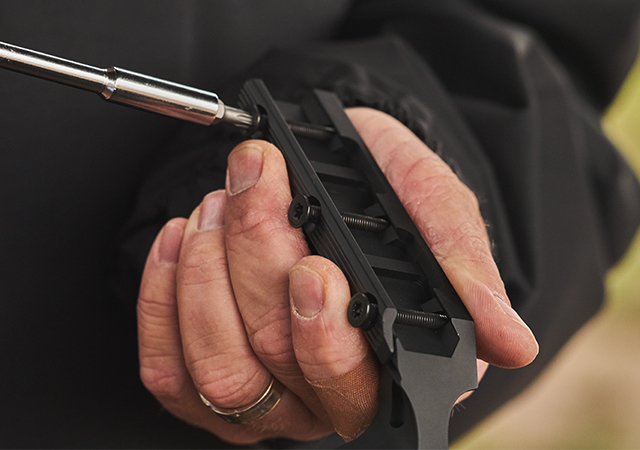
- Torque Check: Inspect all action screws, scope ring fasteners, and rail mountings, torquing them to the manufacturer's exact inch-pound specifications (wood stocks may have contracted or expanded slightly).
- Function Test: Re-cock the bolt, insert it into the dry action, and safely perform several dry-fires to ensure the trigger and safety catch function flawlessly.
Conclusion
Preparing your firearms for long-term storage is an essential extension of the routine preventative maintenance required of any serious marksman. By investing the time to deeply clean your bore, remove your moderator, relieve mainspring tension, and actively control the humidity in your gun safe, you guarantee the longevity and accuracy of your rifles. When the new shooting calendar begins, your equipment will be preserved, protected, and ready to perform.

FAQs
Yes. Leaving a bolt-action or break-action firearm cocked for several months keeps the firing pin spring (mainspring) under maximum tension. Over time, this can cause the spring to compress and fatigue, potentially leading to light primer strikes and misfires in the field. Always manually decock the action before long-term storage.
Absolutely not. Sound moderators trap highly corrosive ammonia and moisture generated by burnt gunpowder. If left attached to the rifle in the safe, this corrosive cocktail will drip down into the crown and bore, rapidly rusting and ruining the barrel. Always remove your moderator immediately after shooting.
How do I stop rust forming inside my gun safe?
First, ensure your rifles are thoroughly cleaned and coated in a protective gun oil before storage. Second, place a rechargeable desiccant pack or a dedicated gun safe dehumidifier inside the cabinet to absorb ambient moisture from the air. Finally, ensure the safe is located in a warm, dry room, away from exterior, damp-prone walls or unheated garages.